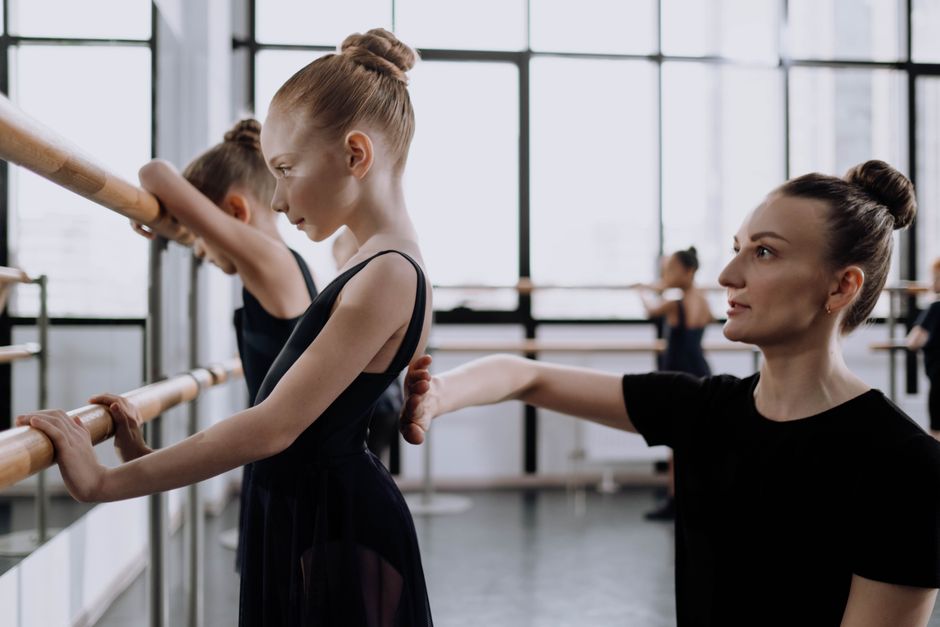
Structured learning is having a moment — and it's showing up in places far beyond the corporate training room. As adult learners increasingly demand clear outcomes, measurable progress, and qualified instruction, ballroom dance courses have quietly emerged as one of the most compelling real-world models of competency-based education in action. Strip away the sequins and the ballroom floor, and what you find underneath looks remarkably like a well-designed RTO program.
Why Ballroom Dance Courses Attract Serious Adult Learners
There is something about ballroom dance courses that draws in a particular kind of adult learner: motivated, goal-oriented, and unwilling to waste time on unstructured dabbling. Unlike recreational hobbies where "having a go" is the whole point, ballroom dancing carries a long tradition of formal instruction, graded progression, and measurable achievement. Institutions like the Elmayer dance school in Vienna have been producing disciplined, technically proficient dancers for generations — evidence that structured pedagogy and dance have always gone hand in hand.
For adult learners in Australia, the appeal is practical as much as cultural. Consider what draws them in:
- Clear outcomes — students know exactly what they are working toward, whether that is a social foxtrot or a competitive Latin routine.
- Visible milestones — progression through bronze, silver, and gold levels mirrors the staged competency model familiar to anyone who has studied a vocational qualification.
- Qualified instruction — reputable studios employ certified instructors who follow recognised syllabi, lending the experience genuine credibility.
- Accountability — lesson schedules, practice requirements, and assessments keep learners engaged in ways that self-directed YouTube tutorials simply cannot.
This is precisely why vocational education professionals find the ballroom world so instructive. The same ingredients that make a Registered Training Organisation (RTO) effective — sequenced content, qualified facilitators, and demonstrable competency — are the ingredients that make a serious dance program work. The parallel is not accidental; it reflects something fundamental about how motivated adults learn best.
Structured Progression in Ballroom Dance Courses: A Framework That VET Professionals Will Recognise
One of the most striking parallels between ballroom dance courses and registered training organisation (RTO) delivery is the way both use clearly defined skill levels to move learners forward with purpose. Rather than dropping students into an undifferentiated pool of content, reputable dance schools organise their programs into sequential tiers — beginner, intermediate, and advanced — each with its own defined outcomes that must be demonstrated before progression occurs.
This mirrors the competency-based training (CBT) model that underpins Australia's vocational education and training system. In the VET context, a learner doesn't simply "pass time" in a unit — they demonstrate observable, measurable skills to a defined standard. Ballroom dance instruction works in exactly the same way:
- Foundation level: Learners master basic timing, posture, and footwork patterns — the equivalent of core prerequisite units in a qualification.
- Intermediate level: Students apply foundational technique under more complex conditions, such as partnering and musical interpretation — comparable to elective units that build specialised capability.
- Advanced level: Dancers integrate all prior learning into fluid, performance-ready routines — much like a capstone unit or workplace assessment that proves holistic competency.
Crucially, progression is evidence-based, not time-based. A student who hasn't yet demonstrated the required footwork precision doesn't automatically advance after a set number of weeks — just as an RTO learner must satisfy assessment criteria before being deemed competent in a unit.
This structure gives learners a clear roadmap and gives instructors a consistent benchmark for quality. It also makes it far easier to recognise and credit prior learning — if a dancer transfers from one studio to another, their demonstrated competency at a given level carries genuine, transferable meaning. That's a principle any training manager working within the Australian Qualifications Framework will immediately appreciate.
Qualified Instructors and the Role of Credentialled Teaching in Ballroom Dance Courses
One of the most immediate parallels between ballroom dance courses and the RTO model is the emphasis placed on instructor qualifications. Just as a Registered Training Organisation must deploy trainers who hold the TAE40122 Certificate IV in Training and Assessment (or an equivalent credential), reputable dance schools require their instructors to carry recognised certifications from bodies such as the Australian Dancing Federation or DanceSport Australia. The underlying principle is identical: a qualified teacher doesn't just know the subject matter — they know how to teach it.
This distinction matters more than it might first appear. In the VET sector, we talk about the difference between vocational competency and training and assessment competency. A tradesperson who is brilliant at their craft is not automatically equipped to transfer that knowledge to a learner in a structured, measurable way. The same logic applies on the dance floor. An award-winning competitive dancer may have exceptional technique, but without formal instruction methodology, they may struggle to break down a foxtrot heel turn into steps a complete beginner can replicate safely and confidently.
Credentialled dance instructors are trained to sequence content progressively, give formative feedback, adapt delivery to different learning styles, and assess whether a student has genuinely achieved a skill — not just approximated it. These are precisely the competencies explored in depth across Vocational Education & Training practice, and they underpin every quality training experience.
For students, this means a tangible quality assurance guarantee. When you enrol with a credentialled instructor — whether for a Certificate III in Business or a bronze-level waltz programme — you can reasonably expect consistent standards, clear learning objectives, and teaching that is accountable to an external framework. Credential-holding instructors in both worlds are not just experts; they are professionally responsible educators.
Measurable Milestones: Tracking Dancer Development from Beginner to Advanced
One of the strongest parallels between ballroom dance courses and RTO-style training is the use of clearly defined, measurable milestones. Rather than leaving progress to guesswork, structured dance programs map a learner's journey through distinct developmental stages — much like a nationally recognised qualification breaks learning into discrete units of competency.
In a well-designed program, such as the ballroom dancing classes at Care to Dance, students typically move through recognisable benchmarks:
- Beginner level: Mastering basic footwork, posture, and timing — the foundational "core units" every dancer must demonstrate before progressing.
- Intermediate level: Introducing partner connection, lead-and-follow technique, and style-specific vocabulary across dances such as waltz, foxtrot, or cha-cha.
- Advanced level: Refining musicality, floor craft, and performance quality — competencies that require consistent demonstration, not just occasional success.
This staged model mirrors how RTOs structure assessment: a learner must demonstrate competency at each level before moving forward. There is no artificial time pressure; progression is evidence-based. A student who needs more time at the intermediate stage simply continues practising those skills until the standard is reliably met.
Instructors track progress through observation, feedback sessions, and sometimes formal assessments like internal gradings or social dance evaluations. These checkpoints give learners — and their teachers — a clear, shared picture of where they stand and what comes next.
For training professionals reading this, the takeaway is straightforward: any learning environment that replaces vague notions of "getting better" with explicit, observable outcomes produces more confident, capable learners. Whether the credential at the end is a Certificate IV or a competition-ready quickstep, the underlying logic is the same — define the standard, assess against it honestly, and celebrate genuine achievement.
Group Classes, Private Lessons, and the Blended Delivery Advantage
One angle that often goes unexamined in discussions of dance pedagogy is the deliberate mix of delivery modes — and how closely it mirrors best practice in contemporary VET design. Reputable ballroom dance programs rarely rely on a single format. Instead, they combine group classes, private lessons, and supervised practice sessions in a way that maximises both skill acquisition and learner engagement.
Group classes provide exposure to varied partners, develop adaptability, and create the social accountability that keeps adult learners returning week after week. Private lessons allow the instructor to address individual technique gaps with a precision that group settings cannot match. Supervised practice sessions — sometimes called "practica" — give students the unstructured repetition time needed to consolidate what they have been taught before the next instructional session.
This three-part structure will be immediately familiar to any RTO practitioner who designs blended learning programs. The group class maps to facilitated workshop delivery; the private lesson maps to one-on-one coaching or targeted support; and the practice session maps to workplace application or self-directed learning hours. Each mode serves a distinct purpose, and removing any one of them weakens the overall outcome. Recognising that blended delivery is not a compromise but a deliberate pedagogical choice is a lesson both dance schools and training organisations continue to refine.
How Ballroom Dance Courses Build Lasting Learner Confidence
One of the most underappreciated outcomes of well-structured ballroom dance courses is the cumulative confidence they build over time. Much like a well-designed VET program, the benefit isn't just in what learners can do at the end — it's in how they feel about their own capacity to keep learning.
When a curriculum is sequenced deliberately, each successful milestone reinforces a learner's belief that the next challenge is achievable. In vocational training, this is sometimes called self-efficacy — the conviction that effort leads to mastery. Dance education produces exactly the same effect:
- Early wins matter. Mastering a basic rhythm or a simple step pattern gives learners tangible proof of progress, encouraging them to persist through harder material.
- Visible benchmarks reduce anxiety. Knowing exactly what "Level 2" or "bronze grade" looks like removes the uncertainty that causes many adult learners to disengage.
- Qualified instructors provide calibrated feedback. Rather than vague praise, structured feedback tells learners precisely what to consolidate and what to tackle next — mirroring the formative assessment practices that RTOs use to support ongoing development.
Confidence as a Transferable Skill
The confidence gained inside a structured dance curriculum rarely stays on the dance floor. Adults who work through a competency-based progression — whether in a vocational qualification or a physical discipline — consistently report greater willingness to take on new learning challenges in other areas of life. That transferability is precisely what quality training design, in any context, is meant to produce.
Taken together, the parallels explored throughout this article reveal something important: the principles that make vocational education effective — clear progression, competency milestones, qualified instruction, and confidence-building design — are not unique to the classroom or the workplace. Wherever structured, purposeful teaching exists, learners thrive, and ballroom dance is a vivid, surprisingly instructive example of that universal truth.